$75.00
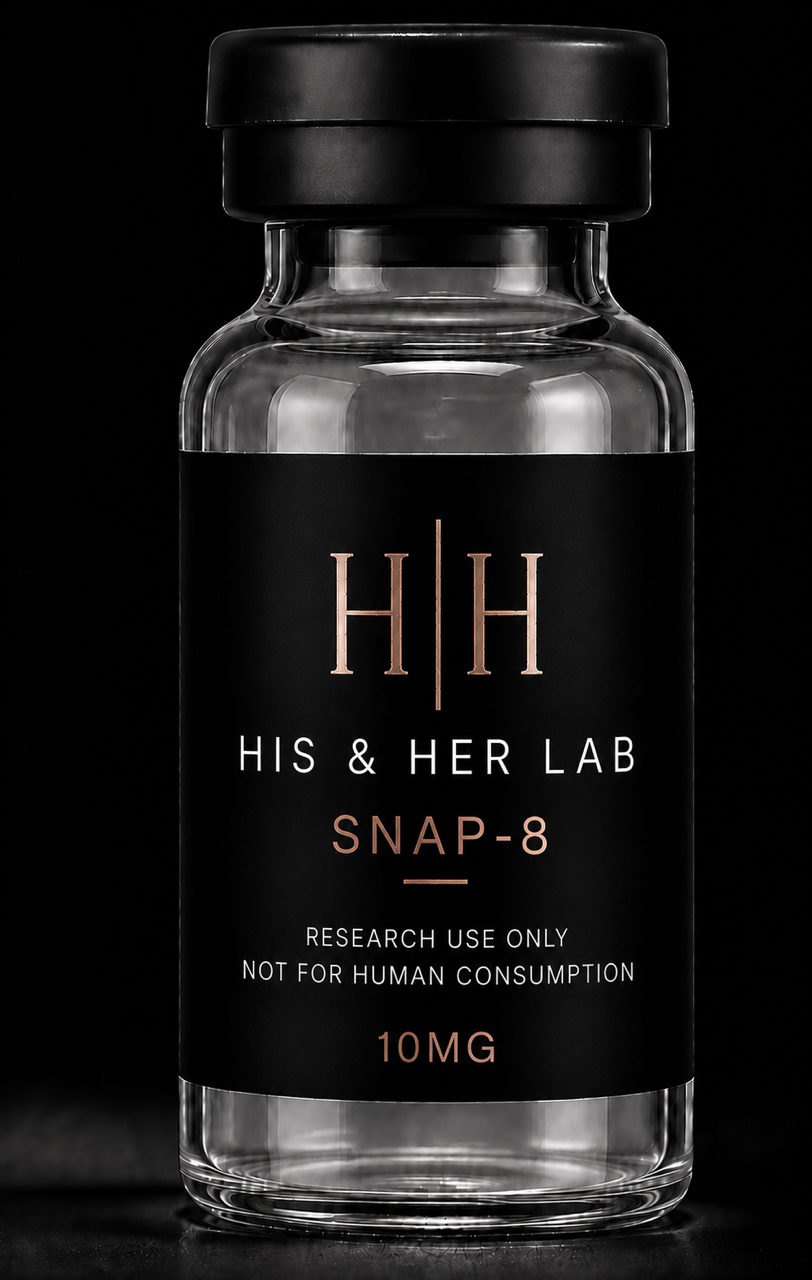
SNAP-8 (acetyl octapeptide-3) is a synthetic cosmetic peptide designed to mimic the N-terminal portion of SNAP-25.
20 in stock (can be backordered)
SNAP-8 (acetyl octapeptide-3) is a synthetic cosmetic peptide designed to mimic the N-terminal portion of SNAP-25, a protein component of the SNARE complex required for vesicle fusion and neurotransmitter release at neuromuscular junctions. By competitively interfering with SNARE-complex assembly, SNAP-8 is studied for its ability to partially inhibit acetylcholine release at the neuromuscular junction — a mechanism analogous to, though far milder and non-injectable compared to, botulinum toxin’s proteolytic cleavage of SNAP-25. This makes SNAP-8 a peptide of interest in topical anti-wrinkle and cosmetic research, where it is examined for its potential to reduce the appearance of expression lines associated with repeated muscle contraction (such as around the eyes and forehead) through gentle, reversible modulation of neuromuscular signaling rather than the more dramatic muscle paralysis produced by botulinum-toxin injections.
Mechanism of Action & Pathways: In experimental models, SNAP-8 is studied for its ability to compete with endogenous SNAP-25 during SNARE complex assembly. This competition alters vesicle docking and fusion efficiency, allowing researchers to analyze regulated exocytosis, membrane fusion kinetics, and downstream signaling effects associated with vesicular release processes.
Cellular & Molecular Research (Laboratory Studies):
SNARE protein-protein interaction dynamics
Vesicle docking and membrane fusion assays
Modulation of catecholamine and neurotransmitter release
Storage and Handling
To maintain stability and research integrity, follow these storage and handling guidelines.
Before reconstitution: Store the lyophilized product sealed in a cool, dry location away from direct light. For maximum long-term stability, store at -20°C.
After reconstitution: Once reconstituted for research purposes, store the material at 2-8°C and protect it from light. For optimal research integrity, use the reconstituted material within 60 days.
Avoid repeated freeze-thaw cycles. Repeated cycles can compromise compound stability and structural integrity.