$120.00
Tesamorelin is a synthetic 44-amino-acid analog of growth hormone-releasing hormone (GHRH), engineered with an N-terminal.
12 in stock (can be backordered)
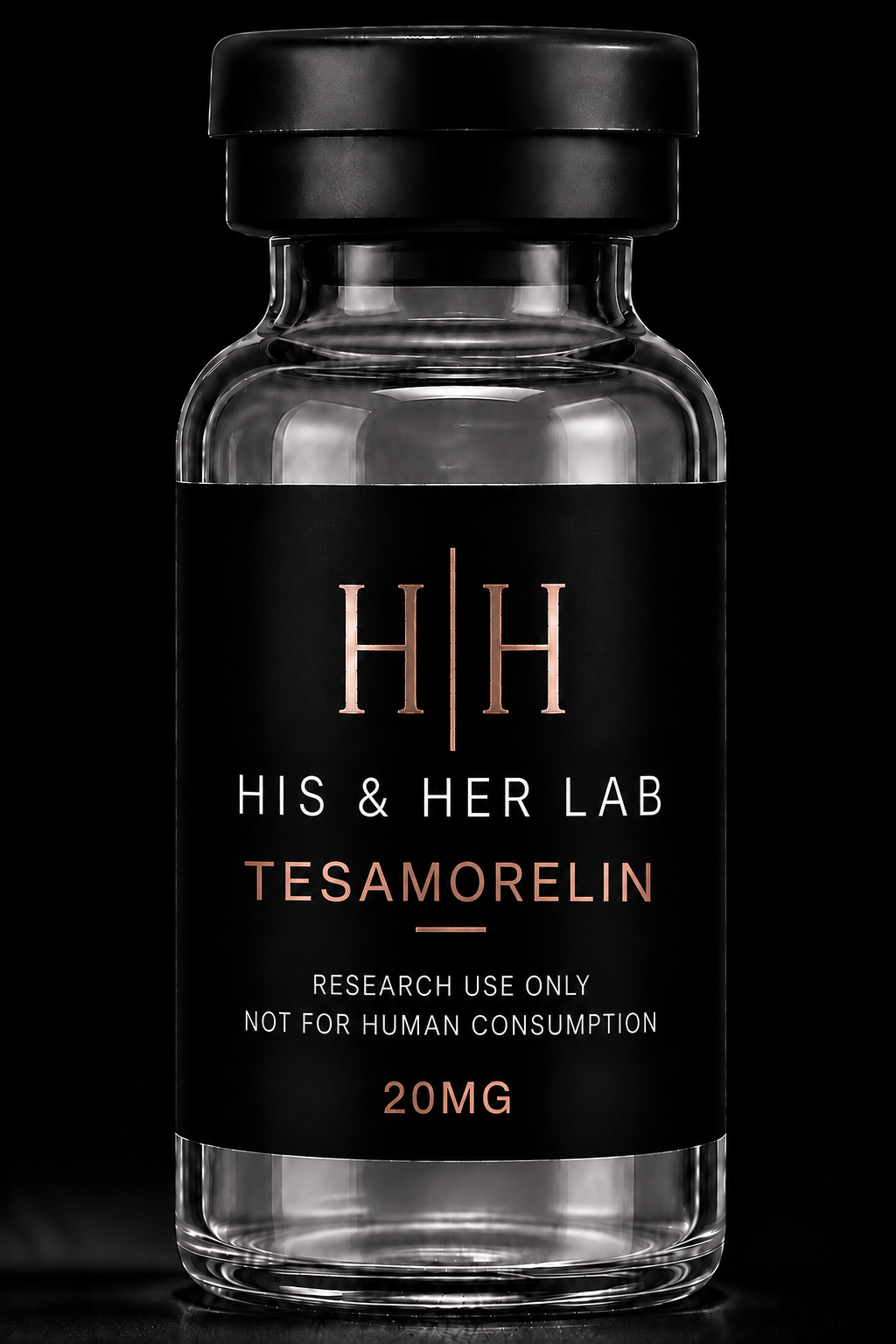
Tesamorelin is a synthetic 44-amino-acid analog of growth hormone-releasing hormone (GHRH), engineered with an N-terminal trans-3-hexenoic acid modification that confers resistance to DPP-IV proteolytic cleavage and extends the plasma half-life relative to native GHRH. Developed by Theratechnologies and FDA-approved as Egrifta® in 2010 for the reduction of excess visceral adipose tissue in HIV-associated lipodystrophy, Tesamorelin functions as a selective GHRH receptor agonist that stimulates pulsatile endogenous growth hormone release from the anterior pituitary, with downstream hepatic IGF-1 production. The compound has been investigated in preclinical and clinical research for visceral adipose tissue (VAT) endpoints, body composition, lipid metabolism, hepatic steatosis, and cognitive function. The 20 mg lyophilized vial format is intended for extended research protocols and bulk in vitro / preclinical assay use.
GHRH receptor agonism — studied for selective stimulation of the GHRH receptor and pulsatile growth hormone release
IGF-1 axis activation — investigated for downstream hepatic IGF-1 production and somatotropic signaling
Visceral adipose tissue research — explored for VAT-specific endpoints in lipodystrophy and metabolic models
Lipid metabolism — examined for hepatic lipid handling and triglyceride pathway endpoints
DPP-IV resistance — researched for extended pharmacokinetic profile via trans-3-hexenoic acid N-terminal modification
Plasma GH and IGF-1 dynamics following GHRH receptor stimulation
Visceral adipose tissue (VAT) measurements via CT or MRI in lipodystrophy research models
Pulsatile vs sustained GH release patterns and downstream somatotropic endpoints
Hepatic steatosis, liver fat fraction, and ALT/AST endpoints
Comparative pharmacology versus CJC-1295 (DAC and No DAC variants), sermorelin, and other GHRH analogs